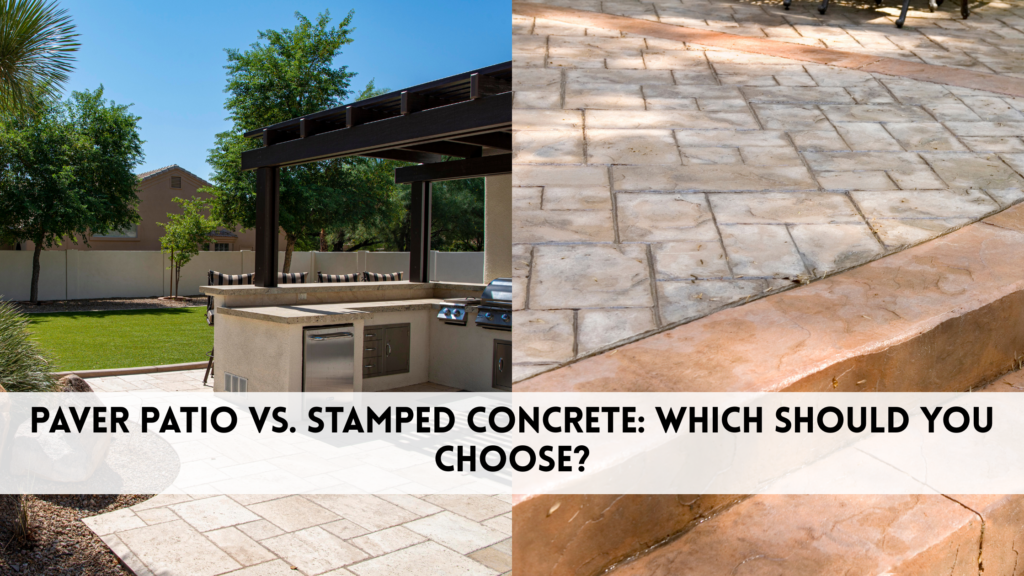
A paver patio is an outdoor surface made from individual concrete, brick, or natural stone pavers installed over a prepared base. These units can be arranged in various patterns, colors, and textures to create customized patio designs. Stamped concrete is a poured concrete surface imprinted with patterns and textures that replicate materials such as natural stone, brick, or slate. Both are popular patio options in Austin, Texas, offering durability and attractive outdoor living spaces. However, they differ in installation, maintenance, repairability, cost, and performance. Understanding these differences helps Austin homeowners evaluate paver patio vs. stamped concrete based on their property, budget, design preferences, and long-term landscaping needs.
Paver Patio vs. Stamped Concrete: Key Differences at a Glance
Pavers and stamped concrete can both create a high-end outdoor space, but their construction and performance differ.
| Feature | Paver Patio | Stamped Concrete |
| Initial Cost | Generally higher | Generally lower |
| Durability | Excellent | Good to excellent |
| Repairability | Individual pavers can be replaced | Cracks can require more extensive repairs |
| Design Options | Extensive colors, shapes, and patterns | Many patterns and colors |
| Maintenance | Joint sand and occasional cleaning | Sealing and crack maintenance |
| Soil Movement | Flexible system can accommodate some movement | Rigid slab is more susceptible to cracking |
| Long-Term Appearance | Individual units can be replaced | Color and sealer may fade or wear |
| Drainage Options | Permeable options available | Requires proper grading and drainage |
For Austin homeowners, proper site preparation is essential for a long-lasting patio. Professional grading, base materials used for the patio, and effective drainage help prevent settling, cracking, water pooling, and other common patio problems.
Why Do Pavers Last Longer Than Stamped Concrete?
Pavers can have a significant durability advantage because they are installed as individual units rather than as a single continuous slab. When the ground beneath experiences minor movement, properly installed pavers can shift slightly with the base rather than develop a single large structural crack.
This characteristic is particularly relevant in Austin, where expansive clay soils can shrink and swell with changing moisture levels. The City of Austin notes that soil movement can affect hard surfaces, including sidewalks and slab foundations.
If one paver becomes damaged or settles, it can usually be removed, the underlying base corrected, and the same paver or a replacement installed. With stamped concrete, a crack can extend across the continuous surface, making it more difficult to repair without creating a visible difference. However, pavers are not maintenance-free. Poor excavation, inadequate compaction, improper drainage, or an unstable base can cause settling and movement. Proper installation is essential for achieving long-term performance.
Do Pavers Add Home Value More Than Stamped Concrete?
Both paver patios and stamped concrete can improve the appearance and functionality of an Austin property, particularly because outdoor living is an important part of the area’s lifestyle. However, there is no universal percentage of home value that every patio will add.
Pavers may have an advantage for homeowners who prioritize premium appearance, customization, longevity, and repairability. Their wide selection of colors, textures, shapes, and patterns allows homeowners to coordinate the patio with landscaping, walkways, retaining walls, and other hardscaping features.
Stamped concrete can also create a sophisticated appearance at a potentially lower initial installation cost. Current Austin cost data places stamped concrete around $10–$20 per square foot, while paver patios commonly range from approximately $8–$25 per square foot, depending heavily on materials and project complexity. Ultimately, installation quality, design, maintenance, and overall property condition matter more than simply choosing one material over another.
Paver Patio Installation: What’s the Process?
A professional paver patio installation involves considerably more than placing stones over the ground. The installation process generally includes:
1. Site Planning and Excavation
The paver patio installation begins by measuring the area, planning the layout, checking elevations and drainage, then removing grass, debris, and unsuitable soil to the required depth.
2. Base Preparation and Grading
A compacted aggregate base creates a stable foundation for Austin patios. Proper grading directs rainwater away from structures while reducing settling, shifting, and drainage problems.
3. Bedding Layer and Paver Installation
A level bedding layer is prepared before placing pavers according to the selected pattern. Professional installation ensures consistent spacing, alignment, and a stable finished surface.
4. Edge Restraints and Joint Sand
Strong edge restraints keep pavers from spreading, while joint sand fills spaces between individual units. Compaction locks the pavers together and improves overall patio stability.
5. Final Compaction and Inspection
The completed paver patio is compacted and inspected for alignment, levelness, drainage, and stability. Final adjustments help ensure a durable, attractive outdoor living space in Austin.
Which Patio Material Handles Austin Weather Better?
Austin patios must withstand intense summer heat, heavy rainfall, occasional freezing temperatures, and seasonal soil moisture fluctuations. The National Weather Service reports an average annual rainfall of approximately 36.25 inches in Austin and notes that the first freeze typically occurs in late November.
Pavers can perform well because their modular construction allows the surface to accommodate some movement. If individual areas settle, they can be lifted and reset rather than replacing the entire patio.
Stamped concrete can also perform reliably when properly designed and installed with suitable reinforcement, control joints, drainage, and a well-prepared base. However, because it is a continuous rigid surface, cracking can become a concern when underlying soil moves. For Austin homeowners, neither material should be selected based on appearance alone. Site conditions, drainage, soil, base preparation, and installation quality are critical to long-term performance.
Which Is Easier to Repair: Pavers or Stamped Concrete?
Pavers are generally easier to repair. A damaged, stained, or settled paver can typically be removed individually without disturbing the entire patio. The underlying base can then be corrected before reinstalling a replacement unit.
Stamped concrete presents a different repair challenge. Small cracks can sometimes be filled or repaired, while larger damage may require patching, resurfacing, or replacement. Matching the original color, texture, and stamped pattern can also make repairs more noticeable.
This repair advantage is one of the strongest reasons homeowners choose pavers for long-term outdoor living spaces. The ability to access the base beneath individual pavers also makes it easier to address localized settlement or drainage issues.
Final Verdict: Pavers vs. Stamped Concrete: Which Requires Less Maintenance?
Both materials require routine maintenance, but the types differ. Paver patios generally require periodic sweeping and cleaning, joint-sand maintenance, and occasional weed control. Depending on the material and homeowner preferences, sealing may also be used to enhance appearance and protect the surface. In Austin, professional paver cleaning and sealing can cost roughly $180–$420 for a 10-by-12-foot patio, according to current local cost data.
Stamped concrete typically requires cleaning and periodic resealing to protect its decorative finish and maintain color. Cracks should also be addressed before they become larger problems. If your priority is easy individual repairs and long-term flexibility, pavers are often the stronger choice. If you want patio & hardscape designing with a potentially lower upfront cost, stamped concrete can be an attractive alternative.
FAQs
Can You Repair a Paver Patio Easily?
Yes. Individual damaged or settled pavers can usually be removed, the underlying base corrected, and replacement pavers installed without replacing the entire patio.
What’s the Real Cost of a 20×20 Paver Patio?
A 20×20 patio covers 400 square feet. Austin paver patio estimates commonly range from about $3,140 to $9,800, depending on materials, site preparation, design, access, and labor.
Is Stamped Concrete Slippery When Wet?
Stamped concrete can become slippery when wet, particularly with certain sealers. A textured finish and appropriate slip-resistant treatment can improve traction around patios and pool areas.
Should You Choose Pavers If You Live in Cold Climates?
Pavers can be a strong choice in cold climates because individual units can accommodate some freeze-thaw movement and can be reset if localized heaving occurs. Proper drainage and base preparation remain essential.
Why Is Stamped Concrete Cheaper Than Pavers?
Stamped concrete can cost less initially because it uses a continuous slab rather than requiring individual units to be placed and finished. Design complexity, reinforcement, site preparation, and sealing affect the final price.
Is Stamped Concrete Worth the Risk of Cracking?
It can be, provided it is professionally designed and installed. Proper base preparation, reinforcement, control joints, drainage, and concrete installation practices can reduce cracking, but concrete cannot be guaranteed crack-free.